Police Clearance Issues 2026: Fix Delays, HITs & Errors Fast
Applying for a police clearance in the Philippines is now more convenient because applicants can register, schedule appointments, and complete parts of the process online. However, applicants may still experience processing delays, HIT status, incorrect personal information, payment errors, missing requirements, technical problems, or lost certificates.
These issues can be frustrating, particularly for first-time applicants or people who urgently need their clearance for employment, travel, licensing, or another official requirement. Fortunately, most police clearance problems have practical solutions.
This guide explains the most common police clearance issues, why they happen, what applicants should expect, and how to resolve them without unnecessary delays.
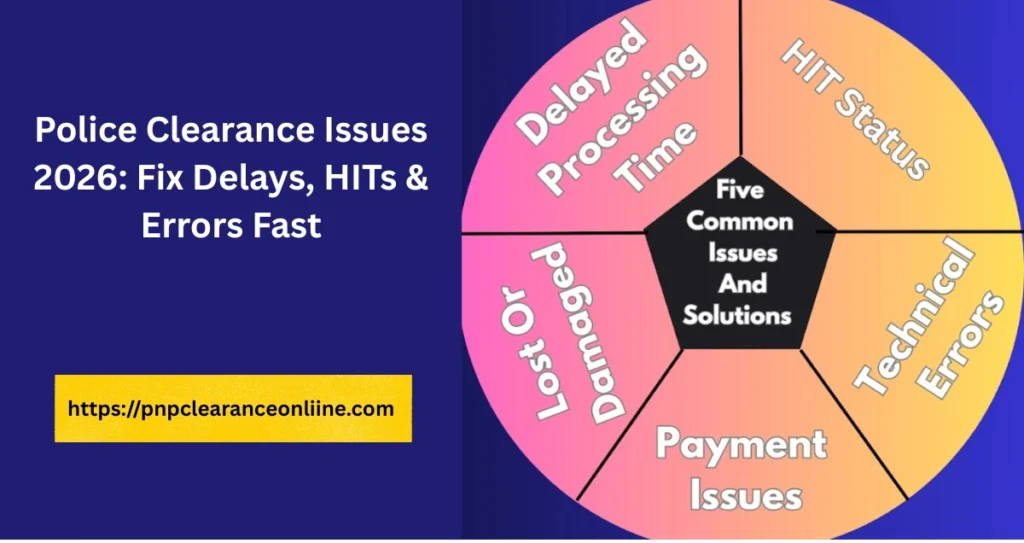
Common Police Clearance Issues
Although applicants may encounter different problems, most police clearance concerns fall into a few common categories. These issues are usually caused by application mistakes, incomplete requirements, high applicant volume, identity verification, payment delays, or temporary system problems.
Understanding these issues before applying makes it easier to prepare properly and respond quickly when something goes wrong.
Delayed Police Clearance Processing
Processing delays are among the most common problems applicants experience. A police clearance application may normally be straightforward, but waiting times can increase depending on the number of applicants, the condition of the online system, and whether the submitted information is complete.
Why Police Clearance Delays Happen
Common causes include:
How to Fix or Avoid Processing Delays
Applicants can reduce waiting time by taking the following steps:
What to Expect
Processing time depends on the workload of the police station, the status of the system, and whether the application requires additional verification.
Even applicants with complete documents may experience longer waiting times during peak periods. Applicants with a HIT status may need to wait several days or, in some cases, weeks while additional verification is completed.
Planning ahead is more effective than applying at the last minute and expecting the station to speed up the process.
HIT Status or Pending Background Check
A HIT status is one of the most misunderstood parts of the police clearance process. It often causes applicants to worry that they have a criminal record, but this is not necessarily the case.
What HIT Status Means
A HIT status means that the applicant’s name matches or closely resembles a name found in the police database. The system cannot immediately confirm whether the record belongs to the applicant, so additional identity and background verification is required.
A HIT is a verification alert. It is not automatic proof that the applicant committed a crime or has a criminal record.
Why a HIT Status Happens
A HIT may occur because:
What to Do When You Receive a HIT Status
If the application receives a HIT, the applicant should:
How Long HIT Verification May Take
The verification period varies according to the type of match and the records that must be reviewed. Some cases may be cleared within a few days, while more complicated cases may take several days or weeks.
Submitting complete identification documents can help the office distinguish the applicant from another person with the same or a similar name.
Important Reminder About HIT Status
A HIT status does not automatically mean that an applicant has a criminal case. It only means the system requires a more careful review before releasing the police clearance.
Incorrect Information in the Application
Incorrect personal information can delay processing, trigger additional verification, or require the applicant to correct and resubmit details.
Even a small spelling difference may create a mismatch between the online application and the applicant’s valid ID.
Common Application Mistakes
Applicants frequently make the following errors:
How to Fix Incorrect Information
Before submitting the application:
If the application has already been submitted:
Why Accuracy Matters
Application details should match the applicant’s identification documents exactly. Differences in spelling, dates, suffixes, or other personal details may delay verification or cause the application to be rejected.
Taking a few minutes to review the application is easier than correcting an inaccurate record after submission.
System and Technical Errors
The online police clearance platform may experience technical errors during registration, login, appointment scheduling, application submission, or payment confirmation.
These issues are often temporary and may occur when many applicants are using the website at the same time.
Common System Problems
Applicants may encounter:
Why Technical Errors Happen
Common causes include:
How to Fix Police Clearance System Errors
Try the following steps:
Applicants should avoid creating multiple accounts or repeating a payment unless the first transaction has been confirmed as unsuccessful.
Police Clearance Payment Problems
A police clearance application may be delayed when the payment platform or clearance system cannot confirm the transaction.

Payment issues are generally fixable, but applicants must keep their transaction records.
Common Causes of Payment Problems
Payment problems may be caused by:
How to Fix a Failed or Unconfirmed Payment
Applicants should:
Important Payment Reminder
Do not immediately pay a second time simply because the system has not updated. First check the payment account, receipt, reference number, and transaction status.
Duplicate payments can create an additional problem and may require a separate refund request.
Lost or Damaged Police Clearance Certificate
Losing or damaging a police clearance certificate can be inconvenient, especially when the document is needed for employment, travel, or another urgent requirement.
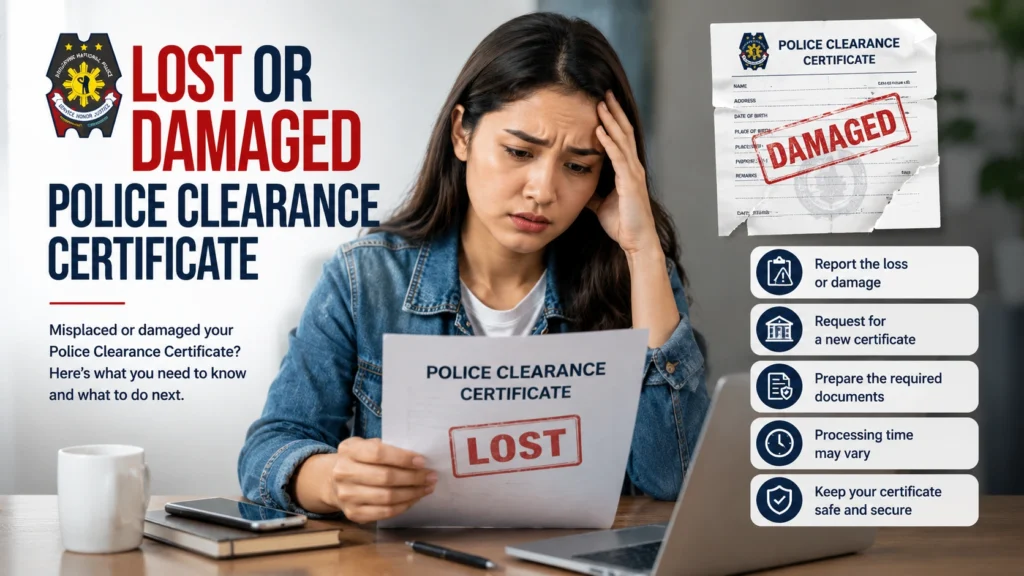
Common Causes
A clearance may become unavailable because of:
What to Do
If the clearance is lost or damaged:
How to Prevent Future Problems
After receiving the clearance:
A digital copy may help with recordkeeping, but an employer or government office may still require the original or a newly issued clearance.
Problems Before the Appointment
Some police clearance problems begin before the applicant reaches the police station. Poor preparation can result in rescheduling, longer queues, or a failed application.
Common Pre-Application Mistakes
These include:
How to Fix or Avoid These Issues
Before the appointment:
Proper preparation reduces the chance of being asked to return on another day.
Problems During the Appointment
Applicants may still face difficulties at the police station even after preparing in advance.
Issues Applicants May Face
Common appointment-day problems include:
How to Fix These Issues
Applicants should:
Applicants who arrive unprepared may be asked to return with the correct documents or submit a new appointment.
Problems After the Application
Some issues appear only after the applicant has completed registration, payment, identification, photography, or fingerprinting.
Common Post-Application Issues
These include:
How to Fix These Issues
Applicants should:
Following up with the original issuing office is usually more effective than contacting an unrelated police station.
Tips for a Smooth Police Clearance Application
The following table summarizes the most practical ways to prevent common police clearance issues.
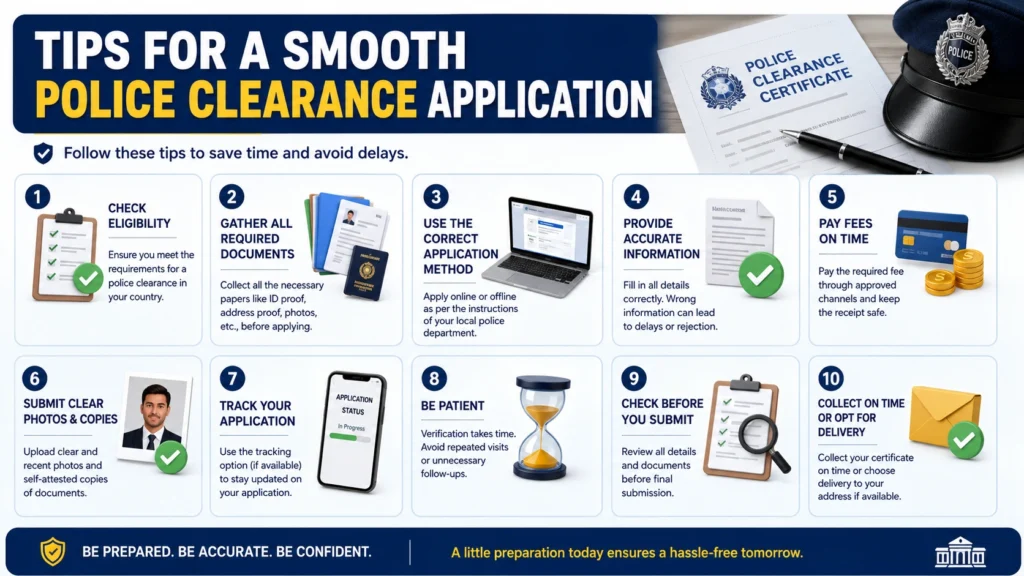
| Tip | What to Do | Why It Helps |
|---|---|---|
| Apply online | Use the official online application and appointment system whenever available. | It can reduce waiting time and prevent avoidable manual errors. |
| Apply early | Begin the process before the clearance becomes urgently needed. | Delays, HIT verification, or system downtime will be easier to manage. |
| Choose an off-peak schedule | Select an early-morning or midweek appointment when possible. | Police stations are generally less crowded outside peak periods. |
| Confirm the police station | Review the station, date, and appointment time before traveling. | It prevents missed appointments and visits to the wrong location. |
| Prepare documents | Gather valid IDs, supporting records, payment proof, and appointment details. | Complete requirements reduce the risk of rescheduling. |
| Carry multiple IDs | Bring more than one valid ID when possible. | An additional ID may help with identity verification or HIT status. |
| Review before submitting | Compare every application detail with the valid ID. | Correct information prevents mismatches and reprocessing. |
| Keep receipts | Save payment receipts, screenshots, transaction numbers, and reference numbers. | These records help resolve missing or delayed payment confirmation. |
| Arrive early | Reach the police station before the scheduled time. | It allows time for queues, verification, and unexpected problems. |
| Follow station instructions | Observe the dress code, appointment rules, and processing procedures. | Failure to follow local requirements may delay the application. |
| Check official announcements | Review official PNP updates when the website is unavailable. | System maintenance or temporary downtime may already have been announced. |
| Keep a digital backup | Scan or photograph the released police clearance. | A backup can help if the original is lost, stolen, or damaged. |
Final Police Clearance Troubleshooting Checklist
Before submitting an application, confirm that:
Frequently Asked Questions
Final words
Police clearance problems are common, but most can be resolved through preparation, accurate information, proper documentation, and responsible follow-up.
Processing delays can often be reduced by applying early, choosing less crowded schedules, and preparing complete requirements. A HIT status usually requires patience and additional identity verification rather than panic. Technical and payment errors can often be corrected by checking transaction records, changing browsers, applying during off-peak hours, or contacting the appropriate support provider.
Applicants should carefully review all information before submission, keep receipts and reference numbers, bring multiple valid IDs, follow the police station’s instructions, and store a digital copy of the released clearance.
A few minutes of preparation can prevent hours or days of avoidable delay.